
Introduction
Do you start your day with an icy shock or a warm embrace? The debate between cold and hot showers has intrigued health enthusiasts and scientists alike. While some swear by the invigorating jolt of a cold shower, others can’t imagine skipping the soothing relaxation of a hot one. But what does science say? Could your shower temperature be affecting your health in ways you never realized? Let’s dive into the fascinating world of thermoregulation and its effects on the body.
The Science of Cold Showers

Cold showers, typically between 50-60°F (10-15°C), trigger a cascade of physiological responses in the body. When exposed to cold water, your body activates vasoconstriction, where blood vessels narrow to retain heat. This prompts the autonomic nervous system to release hormones such as norepinephrine and adrenaline, increasing alertness and energy.
Health Benefits of Cold Showers
- Boosts Circulation: When blood vessels constrict, circulation becomes more efficient, which can improve cardiovascular health.
- Strengthens Immunity: Research suggests that cold exposure may stimulate leukocyte (white blood cell) production, strengthening the immune system.
- Enhances Mood & Mental Alertness: Cold showers boost dopamine and beta-endorphin levels, which have been linked to reducing symptoms of depression.
- Reduces Muscle Inflammation & Speeds Recovery: Popular among athletes, cold therapy minimizes muscle soreness after intense workouts.
- Activates Brown Fat for Metabolism Boost: Exposure to cold activates brown adipose tissue (BAT), increasing calorie burn and potentially aiding in weight.

Potential Drawbacks of Cold Showers
- May be uncomfortable or even shocking for beginners.
- Not recommended for people with hypertension or heart disease due to rapid vasoconstriction.
- Less effective at relieving muscle tension compared to hot showers.
The Science of Hot Showers
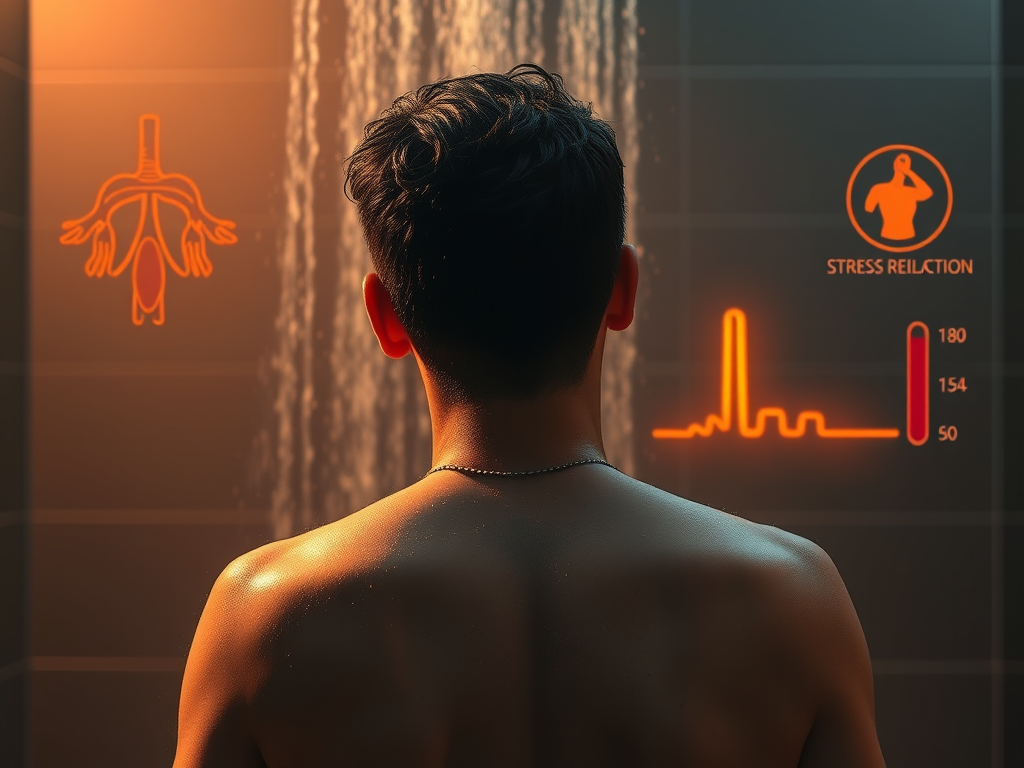
Hot showers, typically between 95-105°F (35-40°C), induce vasodilation, where blood vessels expand, enhancing circulation and promoting relaxation. Heat stimulates thermoreceptors in the skin, triggering the parasympathetic nervous system, which promotes a state of calmness and well-being.
Health Benefits of Hot Showers
- Relieves Muscle Tension & Joint Pain: Heat relaxes muscle fibers, reducing stiffness and improving flexibility.
- Clears Nasal Congestion & Improves Breathing: Steam helps open nasal passages, loosen mucus, and alleviate symptoms of.
- Reduces Stress & Enhances Sleep Quality: Hot showers stimulate the release of oxytocin, reducing cortisol (stress hormone) levels, making them an excellent pre-bedtime ritual.
- Supports Skin Health: Warm water opens pores, allowing for deeper cleansing and better hydration absorption.

Potential Drawbacks of Hot Showers
- Excessive heat can strip the skin of natural oils, causing dryness and irritation.
- Prolonged exposure may lead to low blood pressure, dizziness, or lightheadedness.
- Can aggravate conditions like eczema or rosacea by increasing skin inflammation.
Which is Better?
The choice depends on your personal health needs and preferences. Here’s a quick comparison:
- For muscle recovery & metabolic activation: Cold showers win.
- For relaxation & stress relief: Hot showers take the lead.
- For mental alertness & immune boosting: Cold showers are superior.
- For skin care & respiratory benefits: Hot showers provide the edge.

Some individuals practice contrast showers, alternating between hot and cold water to maximize benefits from both.
Conclusion
So, which shower will you choose tomorrow? Whether you opt for the invigorating rush of a cold shower or the soothing embrace of a hot one, both have scientifically proven health benefits. The key is to tailor your shower routine to your specific health needs.
Have you experimented with different shower temperatures? Do you prefer the shock of a cold shower or the relaxation of a hot one? Share your thoughts in the comments below!
If you enjoyed this article, don’t forget to subscribe for more science-backed wellness insights!
Sources
- Wilmore & Costill, Physiology of Sport and Exercise, 5th ed., p. 210.
- Gleeson et al., Exercise Immunology, p. 123.
- Sapolsky, Why Zebras Don’t Get Ulcers, p. 145.
- Barnett, Using Recovery Modalities to Enhance Athletic Performance, Int. J. Sports Physiol. Perform., p. 247.
- Cannon & Nedergaard, Brown Adipose Tissue: Function and Therapeutic Potential, p. 67.
- Knight & Draper, Therapeutic Modalities: The Art and Science, p. 89.
- Baraniuk, Pathophysiology of Nasal Congestion, p. 302.
- Hobson, Sleep: The Science Behind the Perfect Night’s Rest, p. 157.
- Marks, Skin: A Natural History, p. 191.
If you found this blog interesting, you might also enjoy my other post on human bone strength:
“Are Your Bones Stronger Than Steel?“. Check it out!

 The Learn Nest
Leave a comment