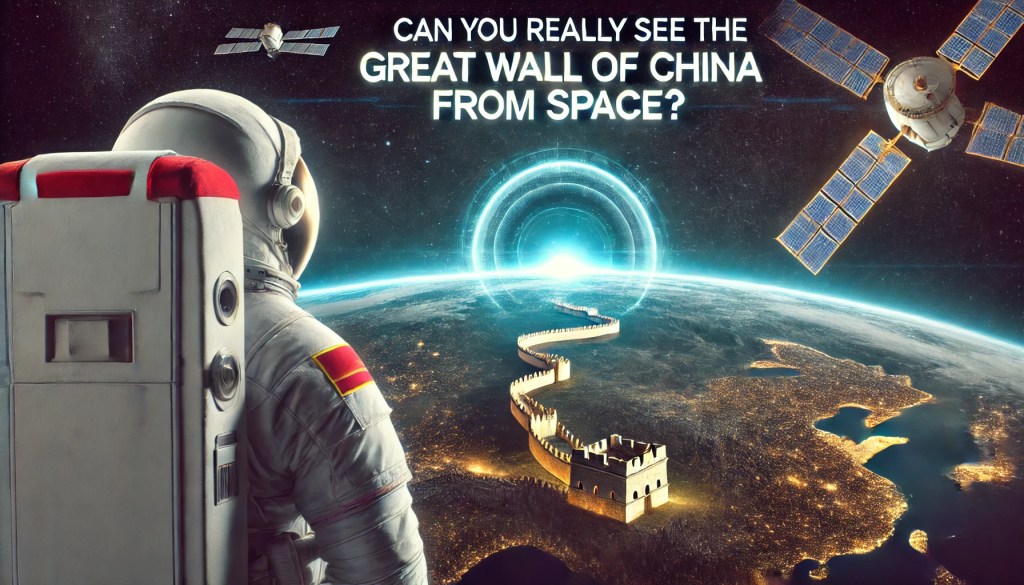
For years, we’ve heard the claim: “The Great Wall of China is the only man-made structure visible from space.” But is this fact or fiction? 🚀
The idea sounds intriguing—after all, the Great Wall is one of the longest structures ever built. But what does science and real astronaut experience say about it? Let’s bust this myth once and for all.
The Origins of the Myth
The notion that the Great Wall can be seen from space dates back centuries—long before humans even ventured beyond Earth’s atmosphere. Some historians trace it to the 18th century, when people speculated that such an enormous structure must be visible from the Moon!
This claim gained momentum when Richard Halliburton published his Second Book of Marvels in 1938, explicitly stating that the Wall was “the only work of man visible from the Moon.” But back then, no one had actually seen Earth from space! 🌍
What Do Astronauts Say?
Once humans finally reached space, the truth started to unfold. Here’s what real astronauts have reported:

- Yang Liwei (China’s first astronaut, 2003) said he could not see the Great Wall with the naked eye from orbit.
- Chris Hadfield, a former commander of the International Space Station (ISS), confirmed that many human-made structures are visible, but the Great Wall is not easily distinguishable.
- NASA has also clarified that the Great Wall is difficult to see without magnification because it blends into the natural terrain.
So, if astronauts in low Earth orbit (~400 km above Earth) can barely see it, how could it possibly be visible from the Moon, which is about 384,400 km away? 🤔
What Can Be Seen from Space?

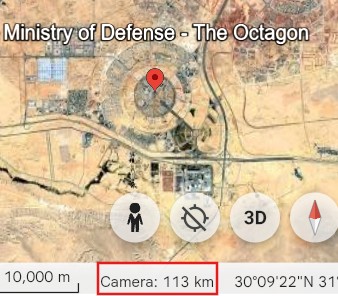
While the Great Wall is challenging to spot, astronauts have reported seeing other human-made structures more easily:
✅ Cities at night – Thanks to artificial lighting, urban areas glow brightly. ✅ Major highways and airports – Large, straight structures contrast against natural landscapes. ✅ Dams and large bridges – Especially those with reflective surfaces. ✅ Agricultural fields – Their distinct geometric patterns make them visible from orbit.
Why Is the Great Wall Hard to See?

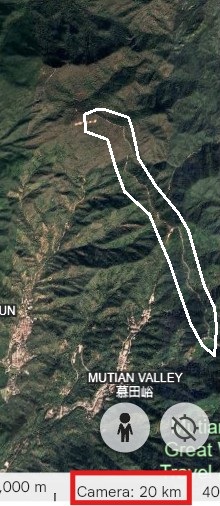
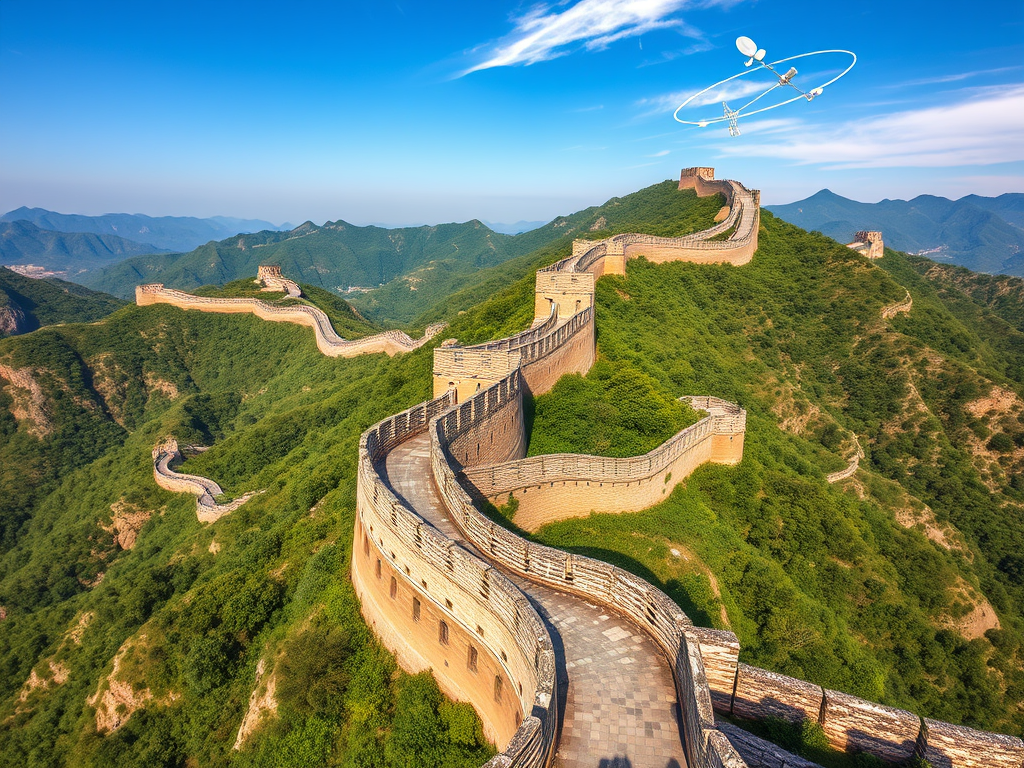
A satellite image showing a section of the Great Wall of China meandering through mountainous terrain, with the surrounding landscape highlighted, as seen from 20 km above the Earth’s surface.
Yet the edge of space – or the point where we consider spacecraft and astronauts to have entered space, known as the Von Karman Line – is 62 miles (100 kilometers) above sea level.
The Great Wall blends into the landscape because:
- It was built using local materials like stone and earth, which match the surrounding terrain.
- It follows the natural curves of mountains and valleys, making it less distinguishable from space.
- It is relatively narrow, compared to massive infrastructure like airports or large road networks.
Can Technology Help?
Yes! While astronauts struggle to see the Great Wall with the naked eye, modern satellites equipped with high-resolution cameras can capture it. In fact, images taken from space by satellites like NASA’s Landsat confirm its presence—but only under the right conditions and with zoomed-in imagery.
For comparison, structures like the Pyramids of Giza or Dubai’s artificial islands are far easier to spot.
Final Verdict: Myth Busted! 💥❌🔍
So, is the Great Wall of China visible from space?
Not with the naked eye! Despite being an engineering marvel, it is not the only—or even the most visible—human-made structure from orbit. If anything, cities, roads, and airports outshine it in visibility.
This myth is a great reminder that not everything we hear is true—sometimes, we need science and real evidence to separate fact from fiction!

Want to Explore More? 🔍
- Learn about Low Earth Orbit (LEO).
- See how satellite imagery helps us understand Earth better.
- Discover more about the Great Wall’s history and its impact on China’s cultural and military past.
What Do You Think? 🤔
Did this blog surprise you? What other space myths have you heard? Drop a comment below and let’s discuss! 🚀
Also, if you love exploring science-backed facts, make sure to subscribe to our newsletter so you never miss a new post!
✅ Stay curious. Stay informed.
📩 Subscribe now and get the latest science facts delivered to your inbox!
You may also like:

 The Learn Nest
Leave a comment