Image Credit : Shutterstock
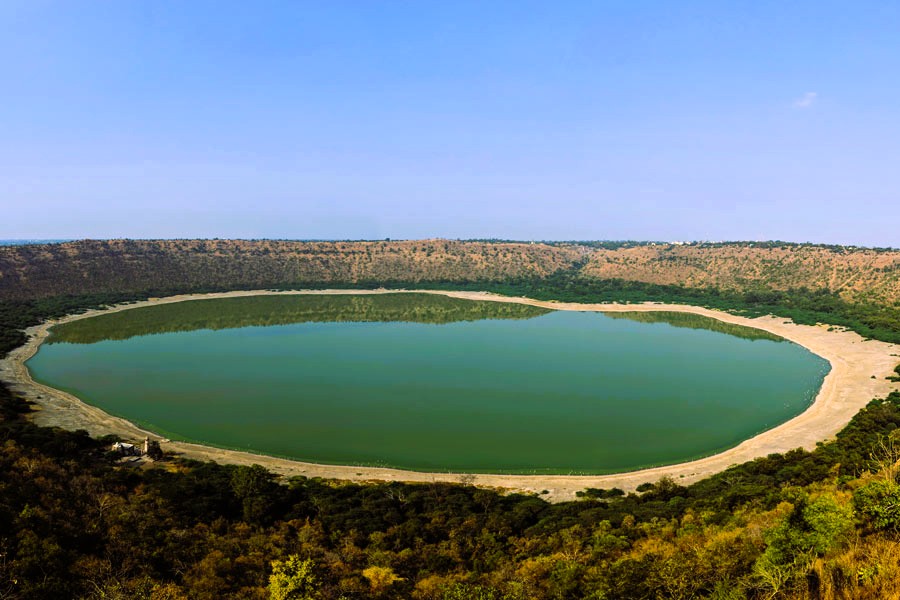
Nestled in the Buldhana district of Maharashtra, India, Lonar Lake is a geological wonder that continues to intrigue scientists, nature enthusiasts, and historians alike. Formed by a hyper-velocity meteorite impact over 52,000 years ago, this lake is one of only four known impact craters in basaltic rock globally. Its extreme environment, unique microbial life, and unusual chemical properties make it a subject of ongoing scientific research and exploration.
A Cosmic Origin: The Science Behind the Impact
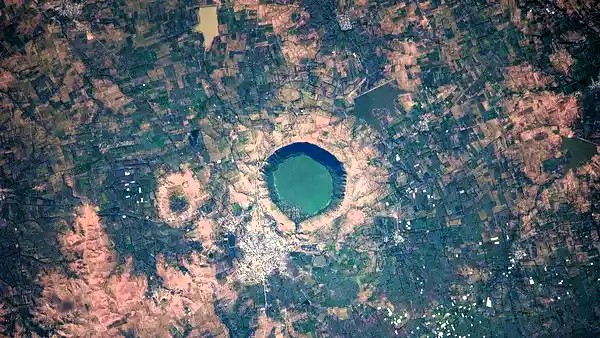
Lonar Lake was formed when a nickel-iron meteorite, traveling at an estimated speed of 90,000 km/h, collided with the Deccan Plateau. The impact released energy equivalent to several megatons of TNT, creating a crater over 1.8 kilometers in diameter and 150 meters deep.

Studies conducted by institutions like the Geological Survey of India (GSI), Indian Space Research Organisation (ISRO), and NASA have used thermoluminescence dating and Argon-Argon (Ar-Ar) isotope analysis to confirm the crater’s formation around 52,000 years ago. The force of the impact melted and fractured the surrounding basaltic rock, leading to the formation of a distinct mineralogical composition, including the presence of maskelynite, a rare mineral found only in meteorite impact sites.
The Unique Chemistry of Lonar Lake
Lonar Lake is an alkaline-saline ecosystem, a rare combination on Earth. The pH levels range from 10.5 to 11, creating an extreme environment where only specialized microorganisms can thrive. Research conducted by institutions such as IIT Bombay and the National Environmental Engineering Research Institute (NEERI) has identified halophilic (salt-loving) and alkaliphilic (alkali-loving) bacteria in the lake, making it a valuable site for astrobiological studies. These extremophiles provide insights into the possibility of life in high-salinity and high-pH environments on celestial bodies like Mars and Europa.
In 2020, researchers observed an unexplained pink discoloration in the lake, which was later attributed to an increase in Dunaliella algae, a microorganism that produces carotenoid pigments in response to changes in salinity and temperature. This phenomenon highlights how environmental fluctuations can influence microbial ecosystems, further cementing Lonar Lake’s significance in climate and ecological studies.
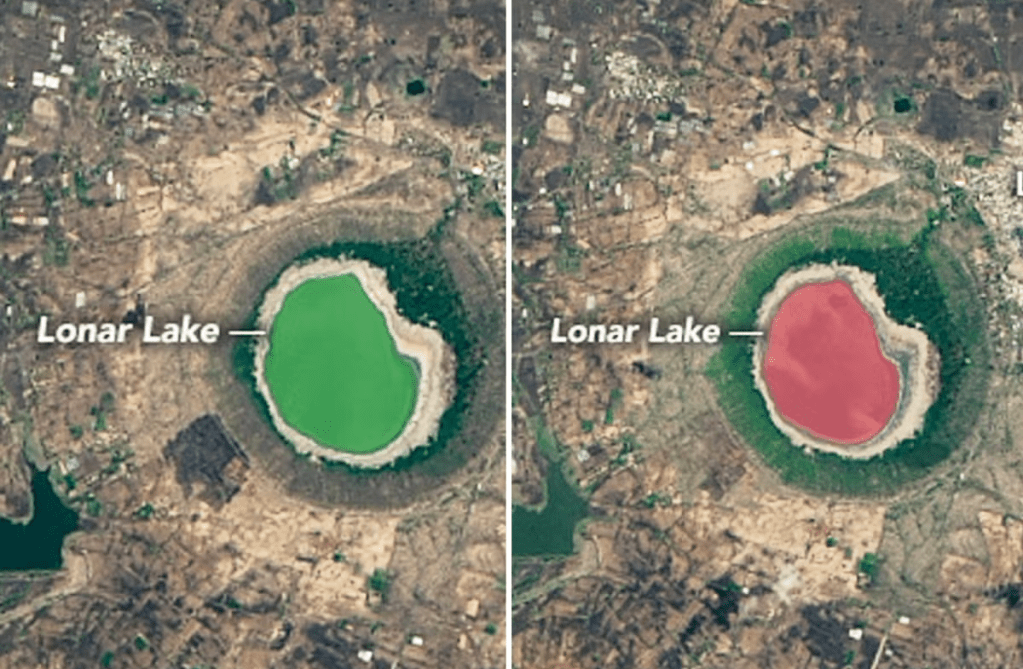
Image Credit : NASA
Mythology and Historical Significance
Ancient Hindu scriptures, including the Skanda Purana and Padma Purana, mention Lonar Lake in mythical contexts. According to legend, a demon named Lonasura was vanquished by Lord Vishnu, leaving behind the massive crater.

Archaeological evidence suggests that the region was inhabited by early civilizations, with ancient temples dating back to the Chalukya and Yadava dynasties. The Daitya Sudan Temple, dedicated to Vishnu, exhibits stunning Hemadpanti architecture and intricate carvings that reflect the artistic brilliance of the era. Other historical temples, like the Kamalja Devi Temple and Motha Maruti Temple, add cultural richness to the region.
Biodiversity: A Natural Laboratory
The Lonar ecosystem is an extraordinary habitat for a variety of flora and fauna. The lake and its surrounding forest support species such as peafowls, langurs, chinkaras (Indian gazelles), and over 160 bird species, including migratory flamingos and herons. Researchers from the Bombay Natural History Society (BNHS) have conducted biodiversity studies, emphasizing the lake’s role as a critical bird sanctuary.

A recent study using remote sensing and satellite imagery, conducted by ISRO and various environmental research institutes, revealed that Lonar Lake’s water level and chemical composition have been changing due to climatic variations and human activities, raising concerns about its long-term ecological stability.
Conclusion
Lonar Lake is more than just a scenic landmark—it is an open-air geological and biological laboratory. This impact crater provides invaluable insights into planetary geology, extremophile biology, and climate science, drawing attention from some of the world’s top research organizations, including NASA and ISRO. From its cosmic origins to its evolving microbial life, from ancient myths to pressing environmental concerns, Lonar Lake continues to inspire curiosity and scientific inquiry.
Plan Your Visit: A Guide to Exploring Lonar Lake
For those fascinated by Lonar Lake’s scientific and historical significance, experiencing its beauty firsthand is an unmissable opportunity. Whether you’re a researcher, a nature lover, or simply an adventurer, planning a trip to this extraordinary site can be a rewarding experience. Here’s what you need to know for your visit:
Local Delicacies: Enjoy traditional Maharashtrian cuisine in nearby villages, such as Pithla-Bhakri and Misal Pav.
Best Season: October to March offers the best conditions for exploration.
How to Reach: The nearest airport is Aurangabad (140 km away), and the closest railway station is Jalna (90 km away). From there, taxis and buses are available.
Things to Carry: Comfortable trekking shoes, water bottles, a camera, and binoculars for birdwatching.
If you found this article informative and want to explore more such scientific marvels, subscribe to our blog for the latest updates on history, and science!
Sources:
“Cultivable bacterial diversity of alkaline Lonar Lake, India” – Joshi, A. A. et al. (2008), Microbial Ecology, Pages 163-172
“Geology of Lonar Crater, India” – Maloof, A. C. et al. (2009), Geological Society of America Bulletin, Pages 109-126
“Drainage systems of Lonar Crater, India” – Komatsu, G. et al. (2014), Planetary and Space Science, Pages 45-55
If you enjoyed learning about Lonar Lake’s cosmic mysteries, you might also find this fascinating:
The Deepest Hole Ever Drilled: A Journey to Earth’s Unknown!

 The Learn Nest
Leave a comment