Have you ever walked into a room, heard a conversation, or visited a place and suddenly felt like you’ve been there before—even though you know you haven’t? That eerie, unsettling familiarity is called déjà vu, a phenomenon that has baffled scientists, psychologists, and philosophers for centuries.
But what exactly is déjà vu? Is it merely a brain hiccup, or could it be something more—perhaps a sign of past lives, parallel universes, or even a flaw in our perception of time? Let’s unravel the mystery.
The Science Behind Déjà Vu: A Brain Glitch?
The term “déjà vu” comes from French, meaning “already seen.” It describes the peculiar sensation of experiencing something as if it has happened before, even when logic tells you otherwise. Scientists have proposed several theories to explain this enigma.
1. Memory Processing Error
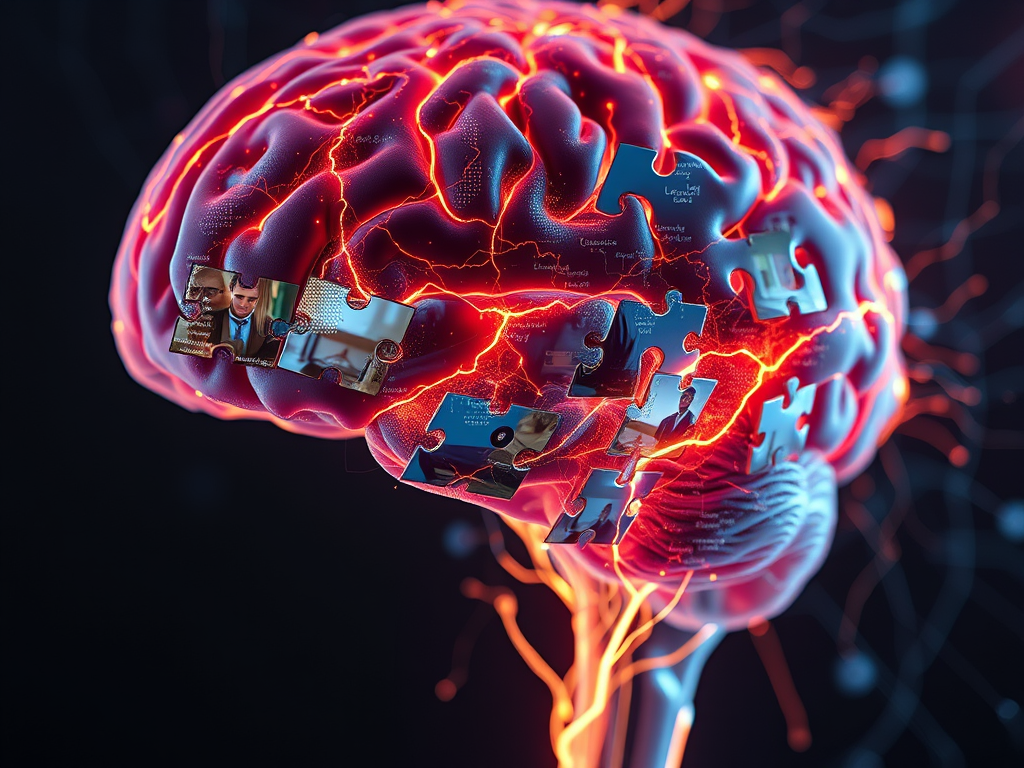
One of the most widely accepted scientific theories suggests that déjà vu is a result of a miscommunication between different parts of the brain responsible for processing memory and perception. Normally, new experiences are processed and stored in short-term memory before being transferred to long-term memory. However, sometimes this process gets disrupted, and our brain mistakenly registers the experience as a memory—creating the illusion that we’ve been through it before.
2. Holographic Memory Theory
Another fascinating theory, proposed by psychologist Dr. Hermon Sno, suggests that our memories are stored as a hologram, where even a small fragment of a past experience can recreate the whole. If we encounter a situation that roughly resembles a past memory, our brain might reconstruct it in a way that makes us feel like we’ve been there before, even if we can’t pinpoint when or where.
3. Neural Delay Theory
Some neuroscientists believe that déjà vu might be linked to a temporary delay in the transmission of signals between different parts of the brain. If the information from one eye or ear reaches the brain a fraction of a second before the other, the brain might mistakenly interpret it as a past event.
Déjà Vu and the Paranormal: Is There More to It?
While science attributes déjà vu to brain glitches, some people believe it has deeper, metaphysical implications.
1. Past Life Memories
Many spiritualists believe that déjà vu is evidence of reincarnation, suggesting that the familiarity comes from experiences in a past life. Have you ever traveled to a foreign country, seen a historic building, or met a stranger and felt an inexplicable connection? Some argue that these moments might be glimpses of memories carried over from another existence.
2. Parallel Universes and Multiverse Theory
Another intriguing theory is that déjà vu could be a brief window into parallel realities—alternate versions of our lives unfolding simultaneously. Could it be that our consciousness momentarily syncs with another version of ourselves in a different timeline? While this remains speculative, physicists exploring quantum mechanics and multiverse theories have suggested that our reality may not be as linear as we think.
3. Time Loops and Premonitions
Some believe that déjà vu is not just about the past but also a glimpse into the future. Déjà vu has occasionally been linked to precognitive dreams, where people experience something in a dream before encountering it in real life. Could déjà vu be a momentary shift in our perception of time, where past, present, and future overlap?
When and Why Does Déjà Vu Happen?
Studies show that déjà vu is more common among young adults, particularly between the ages of 15 and 25. It tends to decrease with age, though scientists are still uncertain why. Certain factors may increase the likelihood of experiencing déjà vu:
- Fatigue and Stress: A tired or overwhelmed brain is more prone to processing errors.
- Travel and New Environments: Visiting unfamiliar places can trigger déjà vu.
- High Cognitive Functioning: Some research suggests that people with strong memory skills and intelligence experience déjà vu more frequently.
Final Thoughts: What Does Déjà Vu Tell Us?
Whether déjà vu is a simple neurological hiccup or a deeper, more profound phenomenon, it remains one of the most captivating mysteries of the human mind. Is it just our brain playing tricks on us, or could it be a momentary peek into another timeline, a past life, or even a glimpse of the future?
What do you think? Have you ever experienced déjà vu that felt too real to be a coincidence? Share your thoughts in the comments below!
If you enjoyed this deep dive into the world of déjà vu, make sure to subscribe for more fascinating explorations into the mysteries of the mind and universe!
Sources:
- Efron, Robert. “Temporal Perception, Aphasia, and Déjà Vu.” Brain, vol. 89, no. 3, 1966, pp. 331–345.
- Brown, Alan S. The Déjà Vu Experience: Essays in Cognitive Psychology. Psychology Press, 2004, pp. 12–28.
- Sno, Hermon. “The Holographic Memory Hypothesis.” Consciousness and Cognition, vol. 3, 1994, pp. 67–83.
🔮 Curious About Intuition and the Sixth Sense? 🔮
If déjà vu fascinates you, then you’ll love diving into the mystery of intuition and the sixth sense! Are some people truly more in tune with hidden energies, or is it just another trick of the mind? Find out here:
👉 Why Do Some People Have a Sixth Sense? The Truth About Intuition

 The Learn Nest
Leave a comment