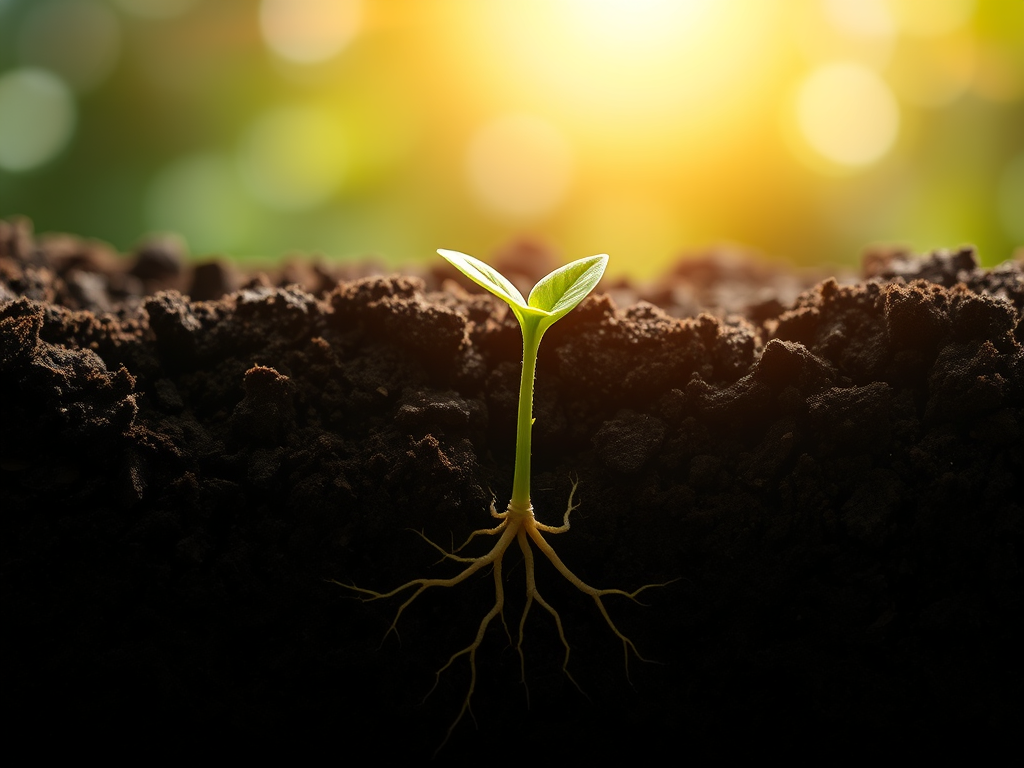
Have you ever planted a seed and wondered, How does it know which way to grow? Why do roots dive deep into the soil while shoots stretch toward the sky? This incredible ability is no accident—it’s the result of a sophisticated biological system driven by gravitropism and phototropism. These natural mechanisms help plants navigate their environment, ensuring their survival and growth. Let’s dive into the science behind this fascinating process!
- The Role of Gravitropism: Plants’ Internal Compass
- The Role of Auxin: The Growth Regulator
- Phototropism: The Light-Seeking Behavior
- What If You Plant a Seed Upside Down?
- Conclusion: Nature’s Perfect Navigation System
- Sources:
The Role of Gravitropism: Plants’ Internal Compass

Image Credit: wikipedia
What Is Gravitropism?
Gravitropism (also known as geotropism) is a plant’s response to gravity. It allows plants to sense their orientation and grow accordingly:
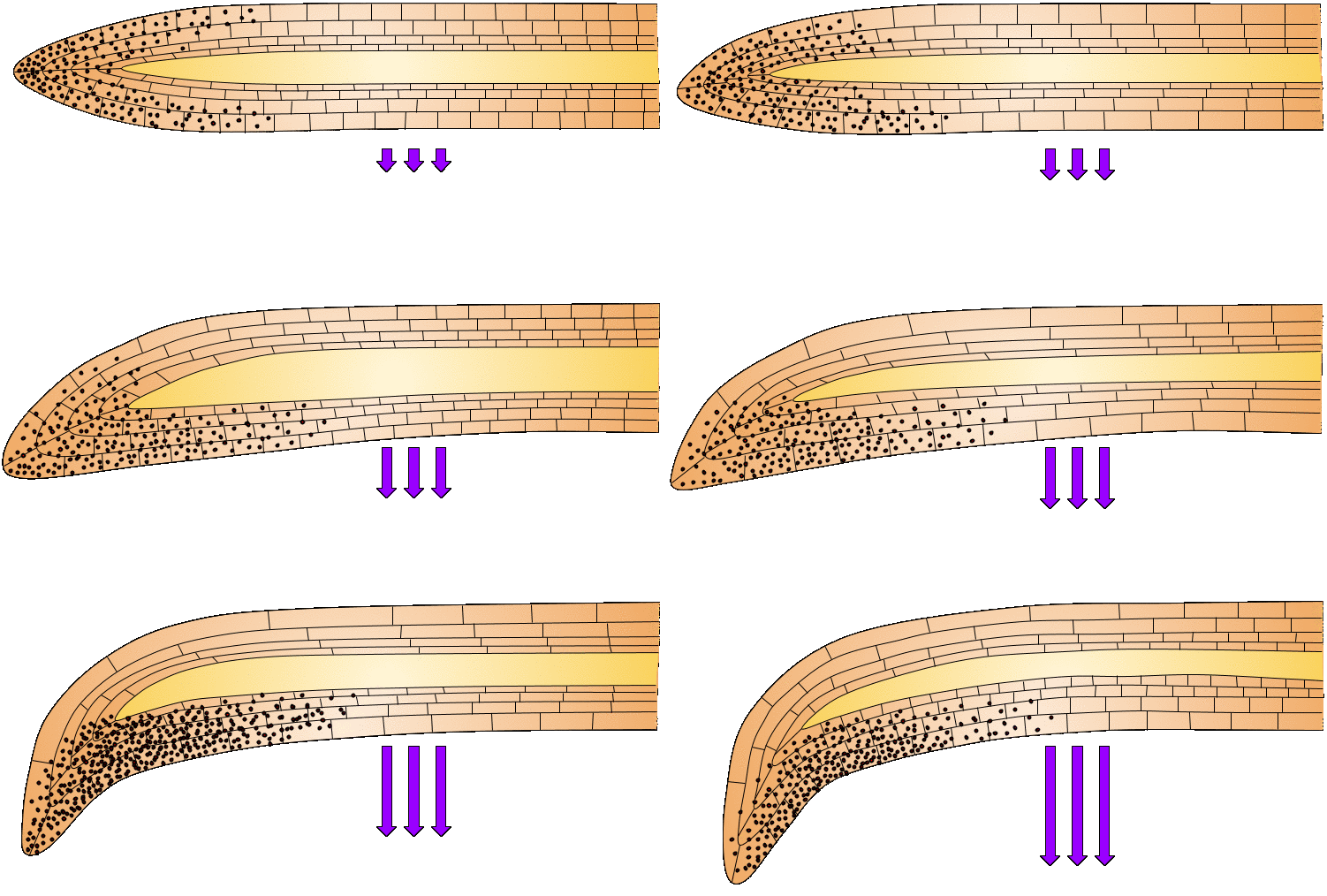
- Positive Gravitropism: Roots grow downward, toward the pull of gravity. This helps them find water and minerals while anchoring the plant.
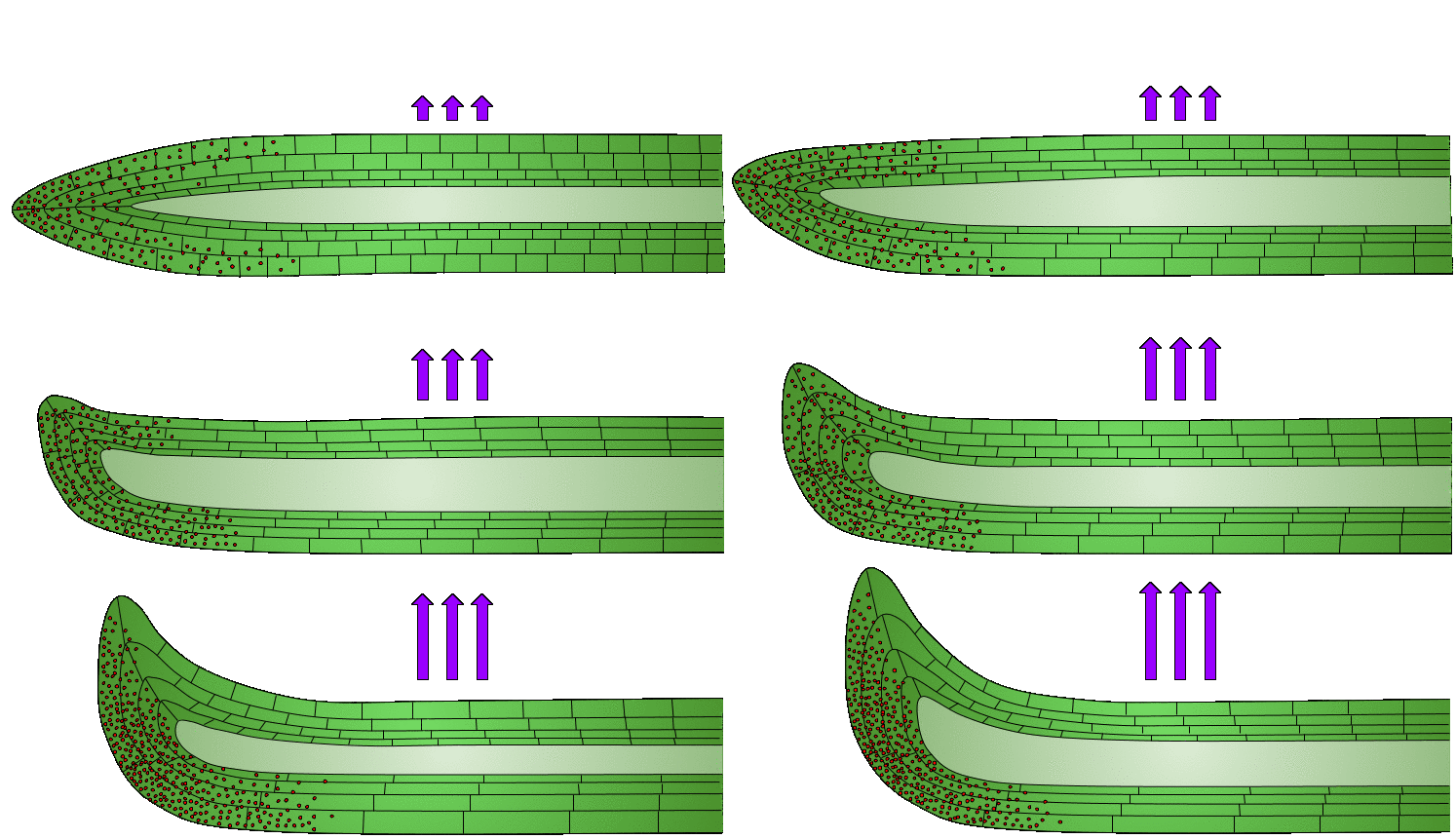
- Negative Gravitropism: Shoots and stems grow upward, against gravity, to reach sunlight for photosynthesis.
How Do Plants Detect Gravity?
Imagine you’re holding a jar of water with sand inside. If you tilt the jar, the sand settles at the bottom. Similarly, inside plant cells, there are special structures called statocytes, which contain tiny starch-filled granules called statoliths. These statoliths settle due to gravity, signaling the plant’s orientation and directing its growth.
The Role of Auxin: The Growth Regulator
Plants rely on a hormone called auxin to regulate their response to gravity. Here’s how it works:
- In roots, auxin collects on the lower side, but in this part of the plant, high auxin levels inhibit growth. This causes the upper side to elongate faster, making the root curve downward.
- In shoots, auxin also accumulates on the lower side, but here, auxin promotes growth. This results in the shoot bending upward.
No matter how a seed lands in the soil, gravitropism ensures the plant orients itself correctly!
Phototropism: The Light-Seeking Behavior
Why Do Plants Grow Toward Light?
While gravitropism ensures proper orientation, plants also seek light for photosynthesis, the process they use to create food. This response is called phototropism.
- Positive Phototropism: Shoots grow toward light to maximize energy absorption.
- Negative Phototropism: Roots grow away from light, ensuring they remain in the soil where they can absorb water and nutrients.
How Does Phototropism Work?
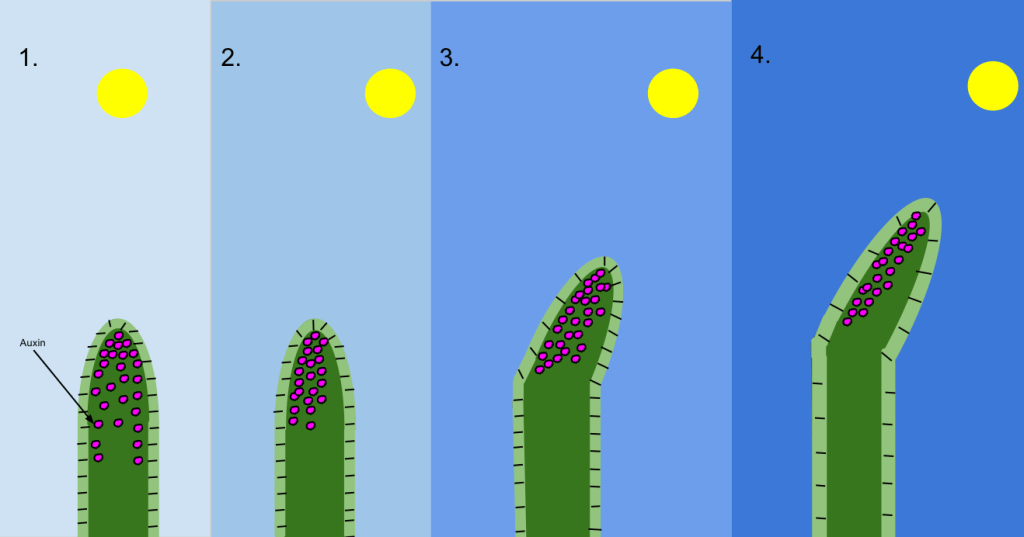
Auxin plays a key role here, too! When light shines on one side of a plant, auxin moves to the shaded side, causing those cells to grow longer. This uneven growth makes the plant bend toward the light.
Ever noticed how indoor plants lean toward a window? That’s phototropism in action!
What If You Plant a Seed Upside Down?
Good news: it doesn’t matter! Thanks to gravitropism and phototropism, the seed will self-correct. The roots will always grow downward, and the shoot will turn upward toward the light, no matter how the seed was positioned.

Conclusion: Nature’s Perfect Navigation System
Plants may not have eyes, brains, or GPS, but they still “know” where to grow. Through gravitropism, they sense gravity and ensure roots grow downward while shoots grow upward. Phototropism then helps them find the light they need to thrive. These remarkable mechanisms allow plants to adapt and flourish in almost any environment!
Next time you plant a seed, take a moment to appreciate the hidden intelligence within. 🌱
Enjoyed this post? Subscribe for more fascinating science insights and plant biology tips!
Sources:
- Taiz, Lincoln, et al. Plant Physiology and Development. 6th Edition. Sinauer Associates, 2015. (Chapter 19, pp. 535-550)
- Raven, Peter H., et al. Biology of Plants. 8th Edition. W. H. Freeman, 2012. (Chapter 24, pp. 612-625)
- Hopkins, William G., and Huner, Norman P. A. Introduction to Plant Physiology. 4th Edition. Wiley, 2008. (Chapter 5, pp. 130-145)
You might find it interesting: Animals That Can Live Forever – The Secrets of Immortality in Nature.
 The Learn Nest
Leave a comment