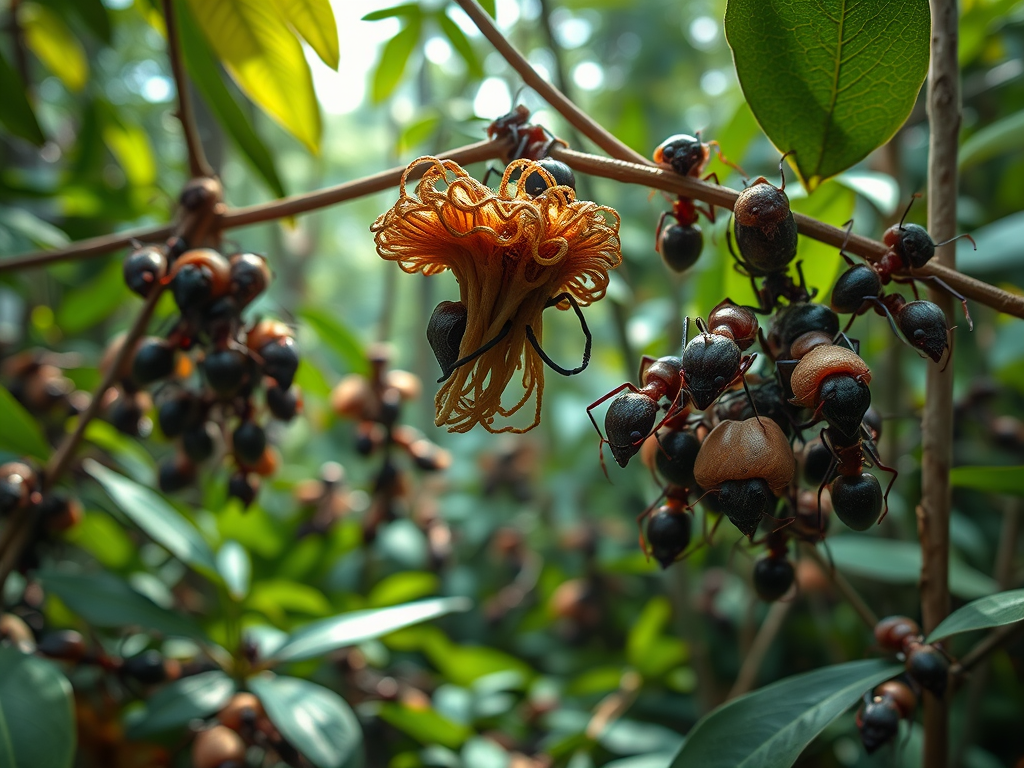
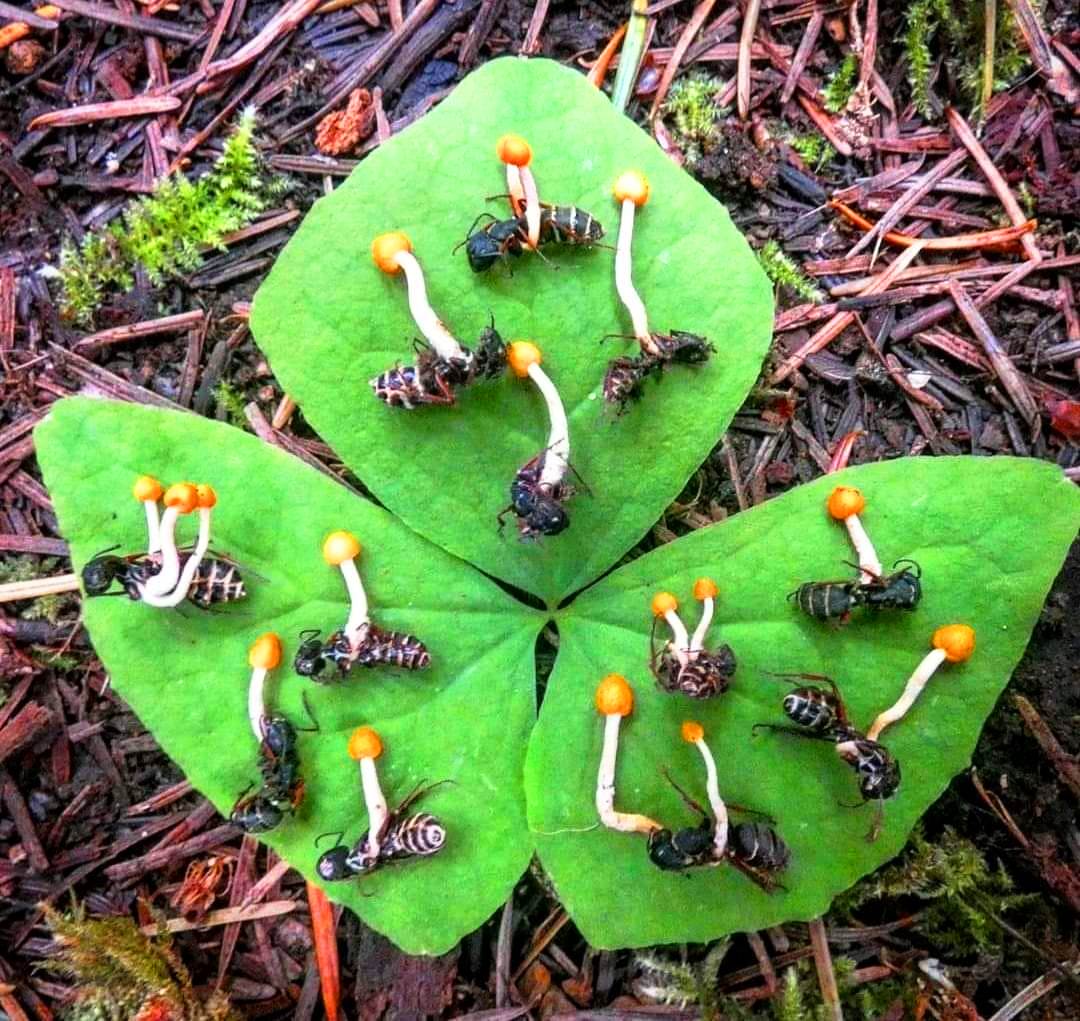
Imagine walking through a lush, tropical forest and stumbling upon a scene straight out of a horror movie: dozens of dead ants clinging to leaves, their jaws locked in a death grip, their bodies eerily suspended above the ground. These aren’t scenes from a sci-fi thriller—they’re the work of a fascinating and gruesome fungus known as Ophiocordyceps, a master manipulator in the natural world.
The Master Puppeteer
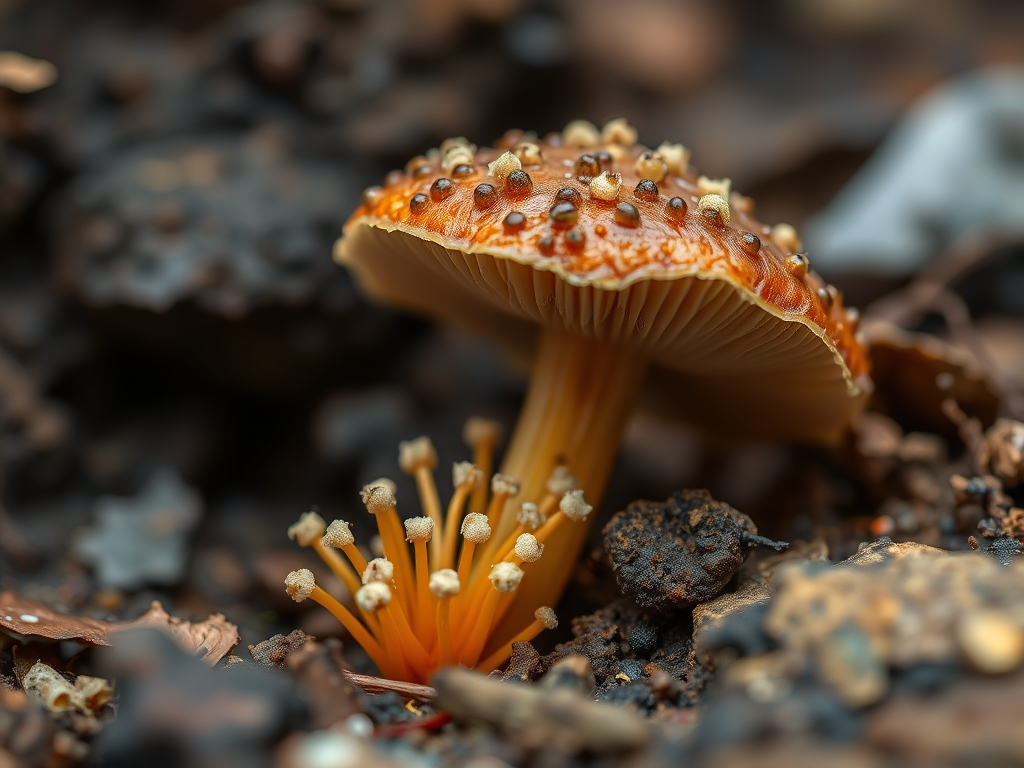
Ophiocordyceps is a parasitic fungus that infects ants, most notably species like the carpenter ant. Its lifecycle is a dark tale of biological intrigue. The process begins when an ant unknowingly comes into contact with microscopic fungal spores. These spores latch onto the ant’s exoskeleton and penetrate its body using a combination of enzymes and mechanical force. Once inside, the fungus slowly spreads through the ant’s tissues, feeding on its nutrients and, most chillingly, taking control of its behavior.
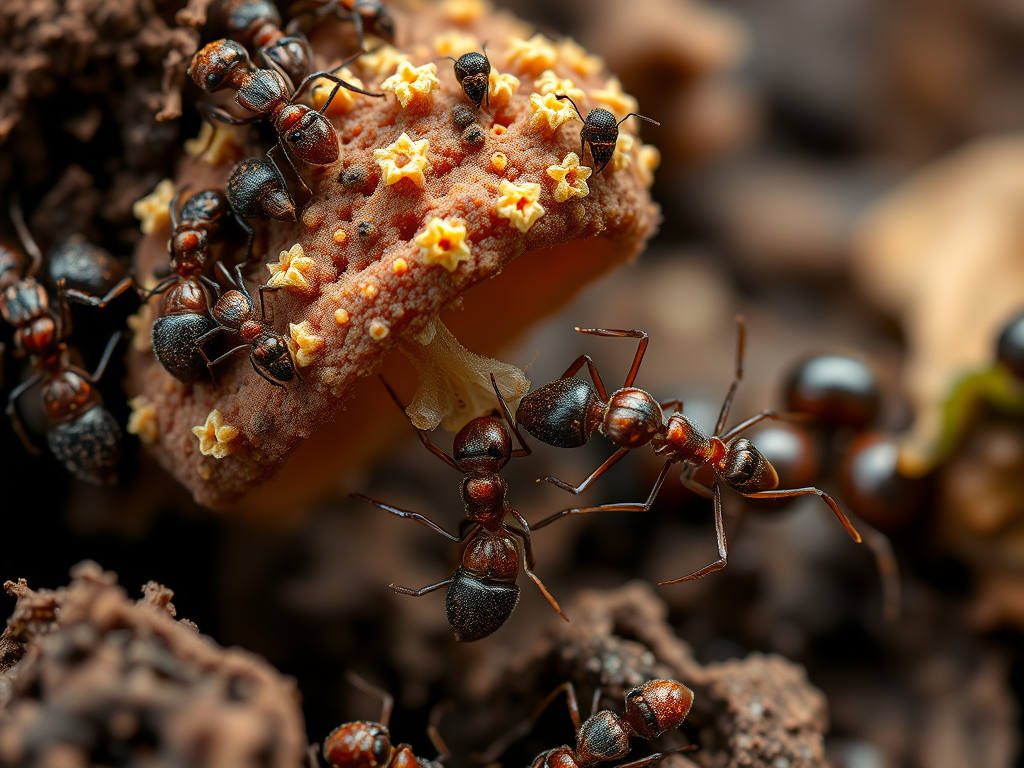

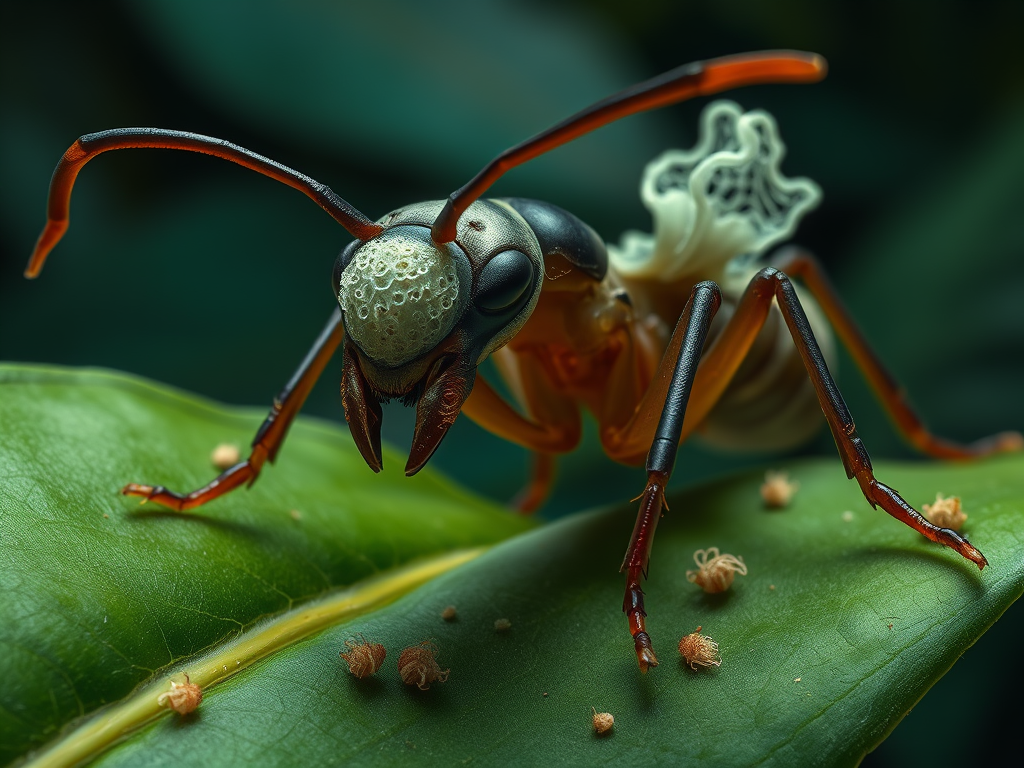
Researchers have discovered that as the infection progresses, the fungus begins to manipulate the ant’s actions. Instead of carrying out its normal routines—like foraging along well-trodden trails—the infected ant starts to wander erratically. The fungus essentially rewrites the ant’s behavioral program, compelling it to climb up vegetation to a precise height (about 25 centimeters from the ground) and latch onto a leaf or twig. This “death grip” is no accident; it’s the fungus ensuring that its spore-releasing fruiting body will be optimally positioned for dispersal once the ant dies.
A Chilling Dance of Death
The moment the ant bites down on that leaf is as tragic as it is fascinating. Locked in place, the ant’s life slowly ebbs away while the fungus continues its work. Over the next few days, the fungus consumes the remaining soft tissues, eventually forcing a stalk-like structure to emerge from the ant’s head. This stalk releases a shower of new spores into the environment, ready to infect other unsuspecting ants—thus continuing the cycle.

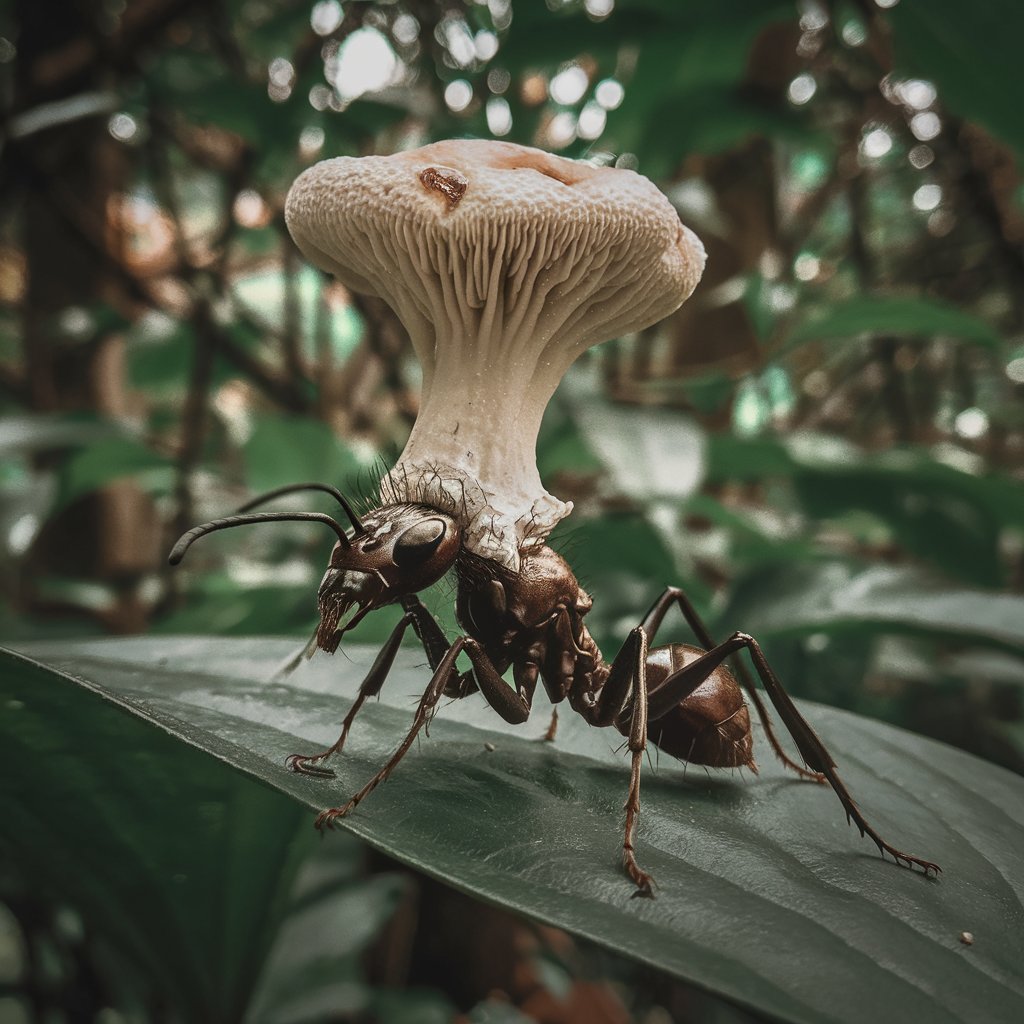
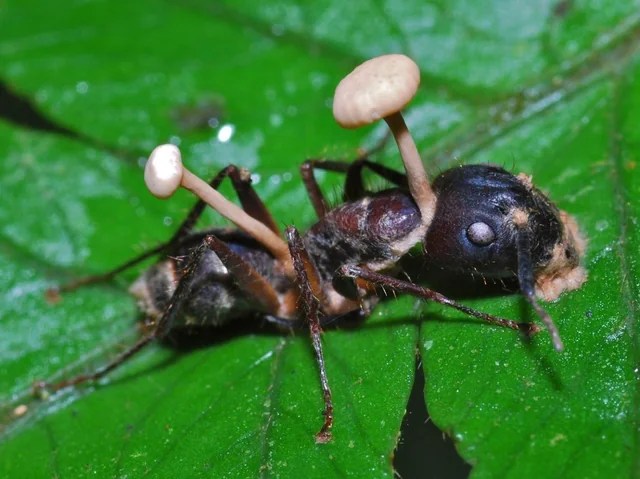
What’s truly astounding is how precisely the fungus controls its host. Despite infiltrating nearly every part of the ant’s body, studies indicate that the fungus avoids damaging the ant’s brain. Instead, it seems to hijack the nervous system indirectly, perhaps by secreting a cocktail of chemical compounds that alter muscle function and behavior. While the exact mechanisms remain an active area of research, scientists liken this form of control to an “extended phenotype”—a scenario where the parasite’s genes influence the behavior of its host in ways that maximize the parasite’s reproductive success.
Nature’s Chilling Adaptation
In the wild, areas teeming with these zombified ants often become macabre “graveyards,” where dozens of ant corpses are found in a single square meter. This phenomenon not only underscores the fungus’s efficiency but also reveals a sophisticated evolutionary strategy. By ensuring its host dies in a location that provides the perfect microclimate—optimal humidity and temperature—the fungus creates ideal conditions for its spores to thrive.
This adaptation is a testament to the relentless arms race between parasites and their hosts. Ant colonies have evolved numerous defenses, such as grooming behaviors and social immunity strategies, to reduce the spread of such infections. Yet, Ophiocordyceps has evolved equally sophisticated methods to overcome these defenses, carving out a niche in the intricate web of forest life.
Pop Culture and the Science of Zombies
The idea of a mind-controlling parasite isn’t confined to the pages of a biology textbook—it has captured the popular imagination as well. TV shows like The Last of Us have taken inspiration from Ophiocordyceps, transforming the fungus into a fictional agent of a zombie apocalypse. While the real fungus is highly specialized and confined to insects, its portrayal in pop culture has sparked widespread interest and even a bit of unease about nature’s hidden power.
Yet, as fascinating as these portrayals are, it’s important to remember that the fungus is a product of millions of years of evolution, finely tuned to exploit the vulnerabilities of its specific ant hosts. A host jump from ants to humans is virtually impossible given our vastly different biology and immune defenses.
Lessons from a Tiny Terror
So, what can we learn from this bizarre natural phenomenon? First, Ophiocordyceps reminds us that nature is full of surprises—often with a macabre twist. The fungus’s ability to control behavior challenges our understanding of free will and highlights the complex interplay between parasites and their hosts. Moreover, studying such interactions can offer insights into neurobiology, behavioral ecology, and even inspire innovative approaches in biotechnology and medicine.

From a broader perspective, the story of zombie ants is a vivid reminder of the intricate balance of ecosystems. Even the most seemingly gruesome processes play a vital role in maintaining ecological harmony. In the case of Ophiocordyceps, its life cycle not only regulates ant populations but also impacts nutrient cycling and energy flow within the forest ecosystem.
Final Thoughts
The next time you walk through a forest or see a documentary on nature’s most unusual phenomena, remember the story of the zombie ant. It’s a tale of survival, adaptation, and the relentless drive of life to persist—even if that means turning a living creature into a mindless vessel for the propagation of spores.
In the end, the world of Ophiocordyceps is a striking example of nature’s capacity for innovation. It forces us to confront our own assumptions about control, behavior, and the hidden forces that shape the natural world. And while the idea of mind-controlling fungi might send a chill down your spine, it also deepens our appreciation for the complexity and beauty inherent in every corner of our planet.
Isn’t it interesting? For more such information do not forget to subscribe.


 The Learn Nest
Leave a comment